
Publications · 5 September 2011
The Final Afghanistan of Belarusian Scholarship
The review was prepared by political scientist and political commentator for the weekly “Nasha Niva” Siarhei Bohdan.
_______________________________________________________________________________________
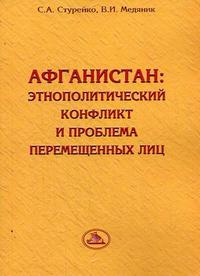
The book by Stsiapan Stureika and Uladzimir Miedzianik, associate professor at Belarusian State University, “Afghanistan: Ethnopolitical Conflict and the Problem of Displaced Persons”, was published by the Minsk publishing house “Tesei” in 2009. The authors declare that it “examines, on the basis of extensive empirical material, the main problems of Afghanistan’s ethnic history at the present stage, as well as issues related to the processes of integration of Afghan refugees and internally displaced persons”. They manage to do all this in 264 pages. The claim is considerable: “At present, it is important to create the foundations for Belarusian Afghan studies as well, and the authors hope that this work will serve that purpose” (p. 7).
A Book About Everything
Yet what has emerged can be described as a compilation of numerous sources, ranging from reprinted statistics to retellings of ideas from various publications, as well as anecdotal information about Afghans in Belarus collected by the authors. The book clearly falls into several fragments: first, two essays on ethnopolitical conflict and the problem of forced displacement; then an essay on ethnic conflicts; then a section on the problems of internally displaced persons in Afghanistan. The fourth section is devoted to refugees in Pakistan in 1979-2006. The fifth is “Afghan Refugees in Europe”.
The first problem is the absence of any main conceptual line. It is unclear what the book is actually about: refugees or ethnic conflict? The two themes develop autonomously. In the end, it turns out to be a book “about everything”. It is no wonder that the authors reproach other researchers: “Among studies devoted to Afghanistan, the majority reflect only individual aspects of the Afghan economy, politics, and culture” (p. 60). In other words, books must be written on a grand scale, precisely about everything.
The attempt to present the intra-Afghan conflict that began in the late 1970s as ethnopolitical/ethnosocial/ethnic looks very strange. Had Stureika and Miedzianik demonstrated the ethnic nature of these events, it would indeed have been a major discovery. But they did not demonstrate it. Page after page, the book cites the opinions of various authors who argue that the conflict is not ethnic, yet this does not prevent the authors from calmly concluding that its content is mainly ethnic. Of course, some researchers, such as Korgun, acknowledge the important role of this factor, but not the “ethnicity” of the conflict as such.
In general, the authors reason only in terms of confrontation between ethnoses (nationalities), and only reluctantly and in passing mention religious and tribal contradictions, ignoring the influence of social and racial conflicts (between Europoids and Mongoloids), conflicts between nomadic and settled populations, between local communities and regional networks, and, finally, simply everyday conflicts. Suffice it to say that even the ordinary ambitions of General Dostum are presented as “separatism” (p. 93).
Meanwhile, all the facts, including those mentioned by the authors themselves — the characteristics of coalitions during the civil war, interethnic marriages, and so on — argue against the main thesis. Moreover, the book quotes a perfectly reasonable observation by S. Akimbekov concerning the 1980s and early 1990s: “In an organizational sense, national minorities acted among themselves and in relation to the Pashtuns as separate ‘tribes’ (p. 103). “Many Pashtun tribes in fact solidarized with Afghanistan’s national and religious minorities in the struggle for local interests against the interests of the state” (pp. 99-100). And further on the book contains statements that demolish its “ethnic” idea: “…after the departure of the Taliban, one can say with a high degree of confidence that they [the Pashtun tribes] largely defend the interests of their own tribe as the simplest and most reliable form of self-identification” (p. 103).
In principle, the book contains no account of the structure and specific features of the way of life of different peoples, nor any explanation of the relationship between clans and tribes. It turns out to be irrelevant that the Pashtuns and Baloch preserve a tribal order, while the Hazaras are persecuted precisely because they are Shiites and also on racial grounds. All this remains outside the book. Incidentally, it seems that the pioneers of domestic Afghan studies are unaware that one can almost put an equals sign between Afghan Shiites and Hazaras, that is, there are almost no Shiites there apart from the Hazaras (p. 88). Instead, the authors assert without evidence or references: “Ethnic conflicts run through the entire history of Afghanistan” (p. 58).
The part of the book devoted to refugees and internally displaced persons (IDPs) looks little better. Several tables are taken from international organizations and national bodies, yet even these are barely analyzed. There is no systematic description of refugee camps or of the legal and actual conditions in which most refugees live in Pakistan and Iran. Having undertaken to analyze the problem as a result of an “ethnopolitical conflict”, the authors suddenly announce that they do not intend to divide refugees and IDPs by ethnicity, since, allegedly, they are all Afghans (pp. 192-193).
At times it is altogether unclear what the authors have taken from UN documents and what is the result of their own analysis (for example, on pp. 131-132, 144, and elsewhere). The section on Afghan refugees in Belarus resembles a collection of tales about Afghans. Without evidence or references, it is stated that most Afghan refugees arrived in Belarus in the 1980s, “with the beginning of the USSR’s military operation in Afghanistan” (p. 222). This is more than doubtful. At that time, they were obviously not refugees, but came to study or undergo training. Of course, students could have stayed and become refugees in the 1990s, but the book says nothing about this. Nor does it say anything about the ethnic composition of Afghans in Belarus, the dynamics of their departure for the West, the attitude of the Belarusian authorities, conflicts between different communities/groups, and so on.
In the Style of Herodotus
Since the book consists mainly of retelling opinions that the authors have found elsewhere, opposing theses sometimes stand side by side without any explanation or separation. Page 67 can serve as an example: first there is a discussion of repression against national minorities by Khalq, and in the next paragraph there is talk of introducing instruction in minority languages and increasing radio broadcasts in these languages. At the same time, it is sometimes difficult to distinguish the authors’ own thoughts from the mass of quotations, which places the whole book on the verge of plagiarism, since the boundaries between quotation and authorial argument are unclear. Moreover, there are, for example, three pages that are essentially copied from a single source (pp. 148-151).
A peculiar kind of critical thinking leads the authors first to attack what may be the best work of Soviet Afghan studies, L. Davydov’s “Afghanistan: The War Could Have Been Avoided. The Peasantry and Reforms”, for “absolutizing economic preconditions” (p. 61), and then later to fall into apologetics.
On p. 140, after listing the problems of forced marriage of women, “with girls under 15 being married off in many cases”, and the fact that “girls from the age of 6 can be sold into marriage”, the authors assume a strange role. It turns out that “this can be explained only by the breakdown of society’s protective mechanisms, since such customs were not practiced in Afghanistan before the war and do not correspond to Islamic and Pashtun norms of behavior” (p. 140). We will have to disappoint them: numerous facts about this phenomenon in Afghanistan and neighboring countries in the past are not only recorded and do not contradict customary culture, but they also do not contradict Sharia, at least in its mainstream form.
Generic and stylistic unevenness leads to the fact that, in the middle of a text about political events, one may encounter a vivid passage about how General Dostum’s fighters were distinguished by “unusually long hair”, wore “trousers down to mid-calf”, and “were known for their ferocity” (p. 71). Or, amid a dry description of the economic problems of refugee camps, we are told that Afghan men and teenagers eat first and as much as they want, while whatever they do not finish or set aside is then “eaten by the women”. The menu is specified, and valuable details are reported: “flour pancakes are served with vegetables or meat cooked in a spicy sauce”, while tea is “generously sweetened with sugar or served with sweets” (pp. 173-174). This is followed by an instant transition to water-supply problems.
Some classifications are interesting. It turns out that minefields are “phenomena of the ecological environment” (p. 152), alongside natural disasters. Traditional clay houses of Afghans are called by the authors “traditional ‘dirty’ houses” (p. 174).
***
What is troubling is that, besides the label “scholarly publication”, the book also has other external signs of scholarly character: two reviewers (one a doctor of sciences, Professor Menkouski, the other a candidate of sciences and associate professor, Blashkou) and even a scholarly editor (candidate of sciences and associate professor, Navahrodski). I emphasize that the book’s shortcomings are visible not only to those knowledgeable about Afghan issues; the problem is visible at several levels: concept, methodology, structure, and argumentation. In such a situation, the presence of scholarly reviewers and editors with high status may indicate the systemic nature of the problem.