
Publications · 28 August 2013
The Female Instead of the Gendered?
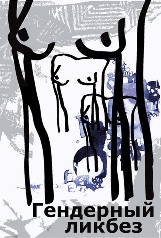 This review was prepared as part of the joint “Book Review” project of the Political Sphere Institute and the Center for European Studies in Minsk.
The popular-science publication “Gender Literacy: A Brochure.” E. Minchenia, O. Sasunkevich (eds.) – Vilnius: Belarusian Human Rights House, 2013. – 224 pp.
Review prepared by Yahor Maroz.
The brochure “Gender Literacy” was published in 2013 in Vilnius as part of the project “Developing Gender Sensitivity as a Precondition for Gender Equality in Belarus (Minsk, Hrodna, and Vitebsk Regions),” implemented by the Belarusian Human Rights House in cooperation with the EHU Center for Gender Studies and a number of other organizations. As the editors inform us in the brochure’s annotation, it is part of a “resource package” for work with gender issues that are rarely discussed in Belarus. Another component of the resource package is a CD with additional materials and a multimedia test consisting of 14 questions, each of which offers a separate interpretation of the answers. The disc is attached to the brochure by means of an insert on the cover. It should be noted that, although the book itself is available on the internet, the information contained on the disc, including the test, is not offered for download (the disc contains 200 megabytes of data, half of which consists of the 2011 statistical yearbook and service files).
The book’s authorial team consists of female participants in the Belarusian Human Rights House project, representing various civil-society organizations. Each topic (the equivalent of a section or chapter; there are 12 in total) is written by one or several authors under the general editorship of Elena Minchenia and Olga Sasunkevich. According to the editors, the brochure is addressed to “all those interested in non-formal gender education, whether their own, that of their organization (NGO), or that of their immediate circle.”
The book consists of four modules: “Gender and Sex: Is Biology Destiny?”, “New Life Strategies and New Forms of Family”; “Gender and Politics”; “Gender Issues in the Media,” as well as a block of exercises for trainers. Some of the exercises can be used when working with any of the topics discussed; others are tied to a specific module or topic. There is also a short guide for trainers explaining the structure of each topic and the main approaches to working with it.
Most of the topics consist of a brief introduction, a theoretical block, a block of facts and statistical data on Belarus, as well as a glossary and a list of additional materials. The most interesting parts are the blocks containing information specific to Belarus, since there are not many other publications in which such information is systematized. Beginning with the presentation of the term “gender” itself and the discussion of gender differences in upbringing and work, the brochure gradually raises increasingly complex topics, including issues that are genuinely rare in the Belarusian public sphere: gender sensitivity in the media; singles and child-free people; the connection between democracy and tolerance toward homosexuals.
From the introduction to the brochure we learn that “the main idea … was to create a product about gender that would allow their colleagues, representatives of various NGOs, not only to read about gender but also to disseminate this knowledge among Belarusian activists, human rights defenders, that is, all those usually referred to as the ‘third sector.’”
What draws attention is the doubling of addressees by explicitly naming representatives of both sexes. This device appears throughout the book: the editors do not forget each time to write “participants” in both masculine and feminine forms, “journalist” in both masculine and feminine forms, and so on.
Yet is the book really addressed to representatives of both “sexes”? The editors also write: “It should be stated that we do not consider gender studies to be synonymous with women’s studies, and we are aware that gender inequality also has a negative effect on the position of men in contemporary society. Nevertheless…”. And indeed, despite this message and the attempt to create a “product” interesting to representatives of the “third sector” of both sexes, “…both the authors and the editors did not manage to avoid a certain asymmetry in developing the thematic content of the resource package.”
This quotation most fully reflects the main problem of the publication: a kind of “editorial helplessness” in working with the authors. The work of bringing texts by different authors into a single format has not been carried out flawlessly. Topic 3 does not correspond at all to the introduction-theory-facts on Belarus structure; in some topics certain blocks are represented only formally, in a single paragraph. The choice of terms for the glossary sometimes causes bewilderment: “polygamy” appears in the glossary but is not mentioned in the text even once, not even in the section on forms of the contemporary family; what “gender discrimination” means is explained in Topic 2, while what simply “discrimination” means appears only in Topic 9; the word “contraception” is explained twice in different topics; “polyamory” is explained only in the text, while “hermaphrodite” is not explained at all, and so on.
The complexity of the text and its saturation with specific terminology vary very strongly from one author to another.
I will not give many examples, but throughout the brochure the reader is thrown from difficult five-line sentences to references to everyday cases or scenes from films, and back again. “While studying at the history faculty of BSU, I attended a course on gender anthropology. The teacher was a man a little over 30, of progressive views, who had interned in Sweden… …By focusing exclusively on sexual practices, public figures lobbying for homophobic policies exclude from view a wide range of other spheres of life activity.”
Of course, such harmonization is a difficult task and, despite certain shortcomings, it has on the whole been accomplished. The situation is worse with the neutrality and completeness of the text. Unfortunately, when the topics are developed, only problems of interest to women feminists come into focus; other aspects are simply passed over in silence.
Let us turn, for example, to Topic 2, “Women’s and Men’s Work…”. For readers of “Novaya Evropa,” it is not news that men, too, can become victims of gender inequality and that a woman author is capable of developing this problematic. The editors are obviously aware of this as well. Yet across the nine pages of the topic there is no room even to mention this issue. In other topics of the brochure, male aspects of gender problems likewise find almost no reflection. If some points are articulated, for example the larger share of women with higher education, they are mentioned in passing, without any interpretation.
The opponents of feminism also suffer from this one-sidedness. For example, in Topic 10, “…on the Right to Abortion,” the film “The Silent Scream”, made by pro-life advocates, is mentioned. The author criticizes the content of the film, “forgetting” to provide its publication details, while four pro-choice films are listed among the additional materials for the topic.
In my view, the editors should have made greater efforts in working with the authors on the balance of the texts. They should not have limited themselves to an all-female collective, but should have tried to seek out male authors; they should not have merely stated the fact of “thematic asymmetry,” but proposed edits and set accents.
Yes, we are given a hint in the introduction to the brochure, and in the afterword to the test it is said openly: “perhaps you did not always agree with our comments, which clearly articulate a feminist position…” – however, it seems to me that as a result the publication ceases to correspond to its title and loses the possibility of fulfilling the task set before it: “to disseminate gender knowledge.”
As a result, despite topics that are new for Belarus and original material, there are unfortunately grounds to assume that the book will be of interest only to a small circle of beginning feminists who no longer need a literacy primer but want to learn new arguments for conducting discussions on gender themes. Women, initially interested, will encounter a complex and uneven presentation of the material and will take away only a few facts about “the hard lot of women,” incorporating them into their usual sex-role discourse; men, seeing the complete ignoring of their problems and the one-sidedness, will ignore the book itself and once again become convinced that “gender is about women.”