
Publications · 18 April 2012
Memory of the Great Patriotic War from a Local Perspective (1944–1965)
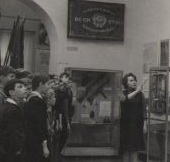
We present a press release for an international academic research project that will be carried out with the participation of the Institute “Political Sphere”.
The Second World War became the most significant event in the history of the twentieth century: epochal, tragic and bloody, it radically changed ideas about the human being and the configuration of global power. In the Soviet Union it came to be called the Great Patriotic War, and in most of the independent republics that emerged after the collapse of the communist superpower this event is still remembered in the form established in the Soviet period.
It might seem that it has always been so and will always remain so.
Yet the historical memory of society is always formed, transformed and determined by the passage of time, state policy, local experience and the needs of particular communities. The proposed research project therefore turns to local perspectives on the memory of the Great Patriotic War in the post-war decades.
The project will examine how the war was remembered at the local level in the period from 1944 to 1965, how official narratives interacted with personal and community memories, and how commemorative practices changed in the first two decades after the end of the war.
Special attention will be paid to the mechanisms through which memory was institutionalised: monuments, commemorative ceremonies, school education, museums, local publications, veterans’ organisations and the work of local authorities. The study will also consider how silence, trauma and everyday post-war experience shaped local representations of the war.
The participation of the Institute “Political Sphere” in the project reflects the Institute’s interest in historical memory, identity and the political uses of the past in Belarus and the wider region.