
Publications · 5 June 2013
How Should We Perceive the “Art Noughties”?
 The review was prepared within the joint project “Book Review” of the Political Sphere Institute and the Centre for European Studies in Minsk.
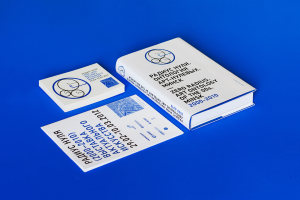
Radius of Zero. Ontology of the Art Noughties. Minsk, 2000–2010 / edited by O. Zhgirouskaya, O. Shparaga, R. Vashkevich. – Minsk: I.P. Logvinov, 2013 (New Europe series). – 532 p.
Review prepared by Yuliya Fomina.
In the Belarusian case, the curators had to do the difficult work of creating the contours of the art field itself, whereas in the Lithuanian case the difficulty lay in identifying the key strategies used within an already delineated field.
I was asked to express my opinion about the book-catalogue, or catalogue-book, depending on which aspect one emphasises, Radius of Zero. Ontology of the Art Noughties, as someone who is partly familiar with Belarusian art and as one of the curators of the exhibition “Lithuanian Art 2000–2010: Ten Years” http://www.cac.lt/en/exhibitions/past/10/4127. This exhibition is mentioned in the catalogue’s introduction as an example of an artistic event that attempted to sum up the artistic results of the first decade of the twenty-first century in Lithuania. Unfortunately, I did not see the “Radius of Zero” exhibition at the Horizont factory, so I will focus on the publication and, comparing it with the catalogue of the Lithuanian exhibition, will set out several theses about the book’s content, value, and necessity both for researchers and for the direct participants in the processes themselves.
Starting from zero
Both Radius of Zero and Lithuanian Art 2000–2010 are based on research into the field of contemporary art and create a kind of “coordinate system” within which this field can be assessed and perceived. In the case of Radius of Zero, as the book’s compilers and the project’s curators note, because there was no periodic systematisation, interpretation, and analysis of artistic events in Belarus during the period under review, such a study had simultaneously to reconstruct the events themselves and interpret them. This, I think, is one of the main differences between Radius of Zero and our publication.
Lithuanian Art 2000–2010 was, from the outset, an institutional project created with the same intention: to sum up the decade symbolically. This project represents not only the collective view of curators from a single institution, itself an active participant in the art field, but is also based on works that had either already been successfully shown at the Contemporary Art Centre or had received broad coverage in Lithuanian criticism, the press, and scholarly writing. In other words, although the compilers’ intentions are similar, in the Belarusian case the curators had to do the difficult work of creating the contours of the field itself, while in our case the difficulty lay in identifying the key strategies used within an already delineated field. Therefore I am inclined to perceive Radius of Zero primarily as a textbook on the history of the formation of the field of contemporary Belarusian art.
The book as a process of becoming
Radius of Zero. Ontology of the Art Noughties can be read as an engaging set of case studies, where the texts range in genre from essays to scholarly research. In this generic diversity I see both a strength and a weakness of the study.
The weakness, in my view, is the following: apart from the fact that all the texts reflect on and are based on the same time period, and aim to comment on it, to offer their point of view, and to say what had not previously been said about the situation of Belarusian art in general and about specific themes and problems in particular, it is difficult to unite them under the slightly pretentious word “theory”, which immediately refers to an academic context. Many of the texts are subjective, many only sketch out landmark events and problems of the last decade, while some are indeed serious scholarly studies with theoretical grounding. In any case, the texts are genuinely interesting and engaging, and what is valuable is precisely that one can find so many different opinions in a single volume and learn so many different facts about the field of Belarusian contemporary art.
The strength of such generic diversity is that this compilation of texts, facts, and stories also reflects the situation of the formation of criticism and theory of art in general. It is therefore not so much a book about the field of Belarusian contemporary art as a representation of the field itself, of its generic, stylistic, and linguistic perception.
Positive polyphony
By way of conclusion, I would like to offer a few more contextual parallels. When we were preparing the retrospective exhibition of Lithuanian art of the past decade and creating its catalogue, despite the abundance of already existing and documented reflections on the processes of that decade, it was quite difficult to choose texts that would correspond to the categories we had identified: appropriation, documentality, institutional critique, collaboration, and fiction. In addition, we faced the difficulty of selecting critics and theorists who could provide a broad analysis or commentary on particular categories. I believe this happened not because the coordinate system we chose is incorrect or irrelevant and therefore difficult to analyse, but because art criticism itself has undergone many changes in recent decades: it has long ceased merely to “serve” artworks and often itself becomes a form of artistic statement.
Therefore I am sincerely pleased that in the field of Belarusian contemporary art, at least the field outlined by Radius of Zero, there are so many voices belonging to artists, curators, philosophers, cultural scholars, and all those who care about it. This abundance of voices gives hope that projects of this kind must be carried out, and that they cannot lead to zero results, because at the very least they consolidate a community and allow it to define itself.
Yuliya Fomina is an art historian and art critic. She works as a curator at the Contemporary Art Centre in Vilnius and coordinates the master’s programme in curating at the Vilnius Academy of Arts. In 2009 she was assistant curator to Kęstutis Kuizinas and compiler of the catalogue for the Belarusian exhibition “Opening the Doors? Belarusian Art Today” (Contemporary Art Centre, Vilnius, 2010; Zachęta National Gallery of Art, Warsaw, 2011). See also Yuliya Fomina’s lecture “‘Histories of Exhibitions’, or Everything You Wanted to Know About Exhibitions but Did Not Know How to Ask”. http://n-europe.eu/eurocafe/lecture/2012/05/24/lektsiya_yulii_fominoi