
Publications · 18 April 2010
Russia as Disease, Literature as Evil
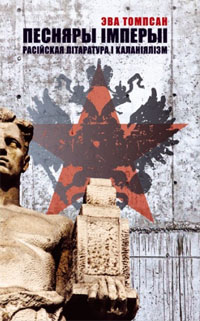 Ewa M. Thompson. Imperial Knowledge: Russian Literature and Colonialism / translated from English by T. Niadbai. – Minsk: Medyiasont, 2009.
The book “Imperial Knowledge: Russian Literature and Colonialism” by the American scholar Ewa Thompson is devoted to the study of Russian literature. Yet the work is very far from literary criticism in the narrow sense; rather, it is a reading of classic works through a postcolonial prism. What comes to the fore in the book is precisely the relationship between empire and colonies in discursive space. Thompson’s main thesis is that Russian literature served imperial interests, namely: 1) Russian writers proceeded from an unreflective imperial position, 2) generally did not notice or belittled other peoples of the Empire, and 3) muffled or deprived oppressed peoples of the right to a voice.
Empire is understood exclusively as a repressive institution engaged only in territorial expansion and the exploitation of conquered territories and peoples.
Thompson makes considerable efforts to show the difference between Western and Russian imperialism / colonialism (and does so quite rightly). Nevertheless, she raises no doubts about any changes or adaptation of the methodology of postcolonialism, developed by Said exclusively in relation to Western imperialism, when applying it to the analysis of the Russian case.
One gets the impression that the basis for the study of Russian literature and imperial discourse in the book is the assertion: Russia is Evil, and the Russian Empire is Mega-Evil. Although this is already a radicalisation of the initial thesis, the American scholar herself speaks more moderately: “Russia’s disease is not in its political system; imperial Russia itself is the disease”. As a result, on almost every page we encounter assertions about the backwardness, lower level and savagery of the Russian state and culture. Do we not encounter here again the same stereotyping and symbolic humiliation of which Russian writers are accused?
Unfortunately, the reading of various plots of Russian literature in “Imperial Knowledge” very often suffers from ignoring context, strained interpretations, and even deliberate falsifications. And yet it is precisely the analysis of classical works that is the strongest part of this book. The work contains many interesting and penetrating observations that arise when familiar texts are read “against the grain”, through the search for the hidden meanings implicitly embedded in literary works by their authors.
Strange as it may seem, it is precisely the author’s simplicity and radicalism, the emotional charge of the text, that make one read with interest these pages devoted to debunking the imperial stereotypes with which Russian literature is permeated.
An undoubted advantage of “Imperial Knowledge” is that it is very difficult to remain indifferent to this book. It easily provokes indignation, especially among those who were brought up on Russian literature. For the intelligentsia of the “oppressed Peoples”, it is easy to become fascinated by this work and to see in it an extraordinary intellectual achievement, since Ewa Thompson consistently and persistently asserts the colonial character of Russian literature. And this is one of the most fundamental foundations of Russian culture, which has long ceased to exist as some independent phenomenon and has close and inseparable links with great-power foreign policy.
Meanwhile, while noting the many shortcomings of Ewa Thompson’s book, one has to admit that the researcher’s initial intention to search for a hidden imperial consciousness in the works of Russian writers is an entirely legitimate and appropriate task. It is just that the researcher’s personal ideological engagement and very weak methodological base have contributed to a solution of this task that leaves a rather sad impression on those who long for a deep and serious analysis of the relations between politics and culture, power and knowledge, Empire and Peoples.
In any case, reading this book leaves doubts and suspicions about great literary narratives, after which the “default discourse” has little chance of success. Yet on the pages of Thompson’s book the Great Suspicion remains closed within the limits of ressentiment. The Empire is still waiting for its worthy deconstructors.
Review prepared by: Political Sphere Institute for Political Studies