
Publications · 14 November 2011
The Crisis of Knowledge about Belarus
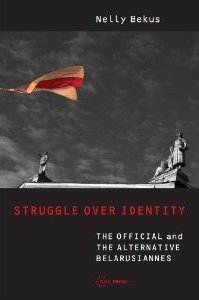 Bekus Nelly. Struggle Over Identity. The Official and the Alternative “Belarusianness”. – Budapest: Central European University, 2010.
Review prepared by Aliaksei Lastouski, a researcher at the Political Sphere Institute and Candidate of Sociological Sciences.
______________________________________________________________________________________
It has long been noted that Belarus does not constitute a special object of interest either for Europe or for the rest of the world. Interest is, of course, declared, since ignoring a political subject in the immediate vicinity of the European Union would now look entirely politically incorrect. But this interest is nominal, since it manifests itself more in fascination with the savage exoticism of the “last dictatorship in Europe” than in attempts to approach Belarus intellectually and strategically. Usually, this asymmetry of interest, characteristic not only of Belarus but also of other “post-colonial” countries, is corrected by emigrants. No one expects theoretical or methodological innovations from such exiles, but there is indeed an interest in transmitting information about places abandoned by God. The author’s biography reflects the career trajectory of an émigré scholar noted above. Nelly Bekus considers herself a Belarusian author, but has lived and worked in Warsaw for a long time (since 1999). Such a position provides opportunities for expanded competence: in addition to direct knowledge of the Belarusian context, one can have direct contact with contemporary trends in Polish and Western scholarship.
Naturally, this also raises the demands placed on the text and compels one to take it more seriously. All the more so because the introduction to the book begins with a harsh statement about the problematic character of studying Belarus’s post-communist transformation, which manifests itself in the dominance of certain “basic truths” that are becoming ever more self-sufficient. Yet in fact this book represents the unfolding of precisely those “axiomatic truths” that dominate many other publications by both Belarusian and Western authors.
The book begins with a description of the most recent history of Belarus. Despite the critical message embedded in the beginning of the preface, Nelly Bekus chooses, in constructing her text, the strategy of creating a coherent and polyphonic narrative. The story of how Lukashenka came to power and established an authoritarian political regime is presented as a single, non-contradictory narrative into which the voices of various authors are woven. In writing the first chapter, Nelly Bekus herself assumes the position of a meta-observer who comes into contact with reality only through mediated texts (at best, through the results of sociological surveys). Therefore Lukashenka’s rise to power, the essence of the political regime in Belarus, or the features of post-communist transformation are presented not as the author’s own experience and reflection by a Belarusian-Polish sociologist, but as the result of reading various analytical literature and bringing the positions and statements of other authors together into a single text. Again, such an approach is a practical refusal of the task of critically revising the field of Belarus studies. Instead of contextualizing knowledge about our country, showing the conditionality of interpretations, and looking for ruptures in the integrity of representations, the author of Struggle Over Identity simply stitches her text together from the scraps of others.
One of the most interesting parts of the book, in my view, is the paragraph “Arguments and Paradoxes of Weak Belarusian Identity,” where Nelly Bekus quite fairly and correctly challenges one of the “axiomatic truths” of Belarus studies: that the success of the authoritarian regime stems from weak national identity. The extensive use of sociological material makes it possible to identify three trends that call this tendency into question:
1) the gradual move of the Belarusian population away from supporting the unification project with Russia and the recognition of the value of state independence;
2) the strengthening of civic identity and pride in one’s country among the inhabitants of Belarus;
3) the erroneous nature of the political-linguistic diversification of Belarusian space, in which Belarusian-speaking inhabitants are identified with the democratic opposition and Russian-speaking ones with Lukashenka’s supporters.
Reliance on sociological data allows Bekus quite rightly to question generally accepted judgments about the weakness and underdevelopment of Belarusian identity.
In the second chapter, however, the Belarusian-Polish sociologist Nelly Bekus moves away from a direct analysis of the situation in contemporary Belarus and tries above all to define theoretical approaches to nation and nationalism. Here, too, the Belarusian-Polish sociologist attempts to summarize the achievements of contemporary research devoted to the implementation of Soviet nationality policy. For the author’s understanding of the development of Belarusian national identity, the fundamental turn in Soviet studies that has taken place over the past two decades becomes essential, a turn associated primarily with the names of American scholars T. Martin, R. Suny, and R. Brubaker. The Soviet Union, from being a repressive empire that harshly suppressed the national ambitions of subjugated peoples, is now mostly described as a state in which institutional preconditions were created for the development of a spectrum of national identities, which ultimately created the proper conditions for the emergence of nation-states.
Finally, the third chapter consists of the results of Nelly Bekus’s own research, and those who have already tired of retellings of other authors’ ideas can at last turn to original conclusions. Unfortunately, the author has not managed to bring anything qualitatively new to the state of Belarus studies. The main conceptual idea – that in contemporary Belarus two versions of the national idea (official and alternative) are struggling for cultural and political hegemony – is already also claiming the status of a deadened “axiomatic truth.” The significant change in conceptualization that Nelly Bekus cites to her own credit, namely that she replaces one national idea with two (that is, she also grants the official project the status of national, which earlier researchers did not give it), has long been obvious.
Thus this book joins the ranks of numerous studies of Belarus in which our country is described as a space divided between opposing “discourses,” each of which possesses its own logic, aims and values, practices and possibilities of institutional embodiment. This leads to an inevitable reduction of a complex reality, excluding all phenomena that exist “in between,” with a tendency to ignore interactions and mutual influences, transfers and borrowings (but, as we remember, the author has a preference for static pictures, so this should come as no surprise). In addition, the “objective” analysis of the Belarusian situation is almost always axiologically predetermined: here, too, the opposing cultural and political camps are in essence already marked with a “minus” (the “demonization” of state discourse) and a “plus” (the “idealization” of alternative discourse), which leads to a predictable conditioning of interpretations and conclusions.
Thus the publication of this book can be welcomed, since knowledge about Belarus is very limited for the English-language reader, both in volume and in quality. But in essence Struggle Over Identity is more an heir to those shortcomings of the body of Belarus studies about which Nelly Bekus writes in the preface to her work. She tries to articulate those points that have so far not been adequately perceived by many researchers (the specific significance of the Soviet experience for the formation of Belarusian identity, the inclusion of national interests in the foundation of state ideology), but many of the basic schemes used by the author have clearly outlived their usefulness and require critical revision. Most regrettably, the research part of the book itself (the third chapter), which examines the struggle between the official and alternative versions of Belarusianness, is conceptually flawed and weakly elaborated. Therefore we have received rather a work that sums up the crisis points in the study and representation of the Belarusian situation and constitutes a strong argument for a long-overdue revision of this field, although we had hoped for a study that would open new horizons.